The highest mountain of the Grisons and the Albula Alps lies at the heart of Grisons. That central position makes the Piz Kesch a popular tour destination. As the highest point between the Silvretta and the Adula Alps, it offers one of the finest views in the region from its summit: in clear conditions it reaches as far as the Ötztal Alps, the Ortler and the Adamello, the Bernina group and the Valais Alps.
West of Chur the Ringelspitz rises above the Vorderrhein valley. The mountain, known in Romansh as Piz Barghis, is the highest summit in the canton of St Gallen and lies on the border with Grisons. The Ringelspitzhütte of the Swiss Alpine Club, south-east of the mountain, makes a good starting point for tours to the summit. The winter and spring months are particularly well suited to the ascent.
The impressive Niesen towers south of Lake Thun. Due to its pyramid-shape in the winter months, when the sun is low, the summit casts a large triangle shadow on the community of Spiez at the foot of the mountain. Since 1910 the mountain top can be reached with the Niesenbahn, a funicular railway.
The Mutspitze is the local mountain of Dorf Tirol and forms the south-eastern end of the Texel Group in the Ötztal Alps. The summit is a popular destination for day hikes and offers magnificent views down the valleys south towards Merano and north into the Spronser Valley and the rest of the Texel Group. The ascent starts with the Hochmuth cable car and from there either from the east via the Mutkopf or from the west via the Leiter Alm and the Taufenscharte. The demanding route is easily manageable thanks to the hiking trails carved into the rock.
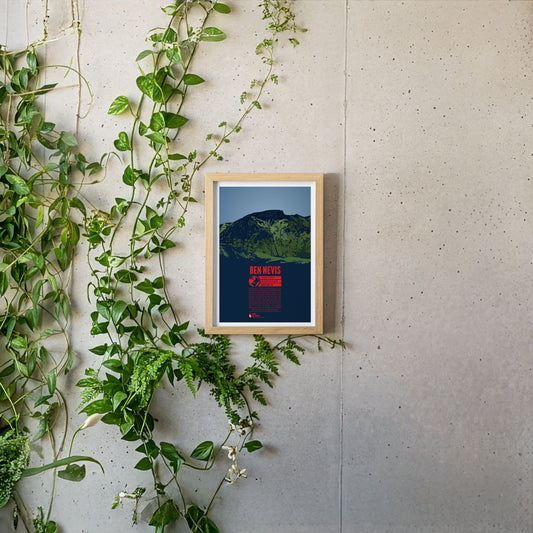
Ben Nevis, east of Fort William, is the highest mountain in Scotland and Great Britain. The Gaelic name “Beinn Nibheis” can be translated as “mountain with its head in the clouds”. The summit of the former volcano is covered in fog or rain 300 days a year due to its maritime location. The weather conditions pose a severe risk for mountaineers. The first documented ascent of Ben Nevis took place in 1771. Today it is one of the world's most frequented peaks. The 700 meter high northeast face is particularly popular for ice climbing.
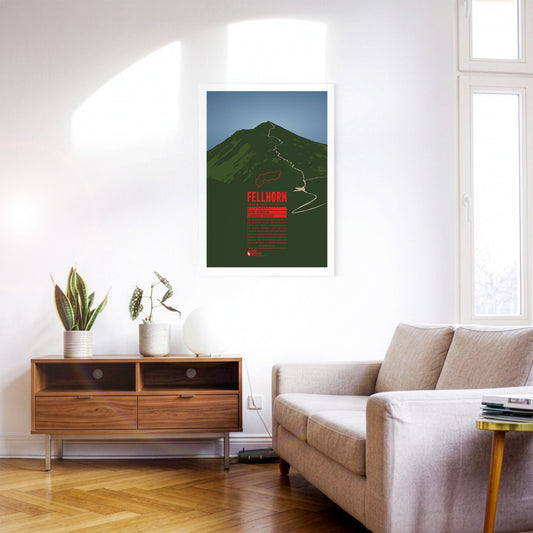
The Fellhorn is known as the flower mountain of the Allgäu Alps, especially due to the large fields of alpenroses on its slopes. As part of the Schafalp-group in previous times the mountain was also known under the name “Schlappolder Spitz”. From the Stillachtal valley the aerial lift Fellhornbahn takes visitors to a height of about 70 meters below the summit.
Áhkká is situated in northern Sweden, in the Stora Sjöfallet national park. It is also known as the “Queen of Lapland”. The mountain massif is dominating its surrounding area and is of high importance in the Sami culture. Its name refers to the mother goddess Maderakka. The summit region of the Áhkká-massif consists of twelve peaks with Stortoppen being the highest. Nordosttoppen (north east peak) also reaches a height of over 2000 meters. The first recorded ascent of Stortoppen was accomplished in 1924.
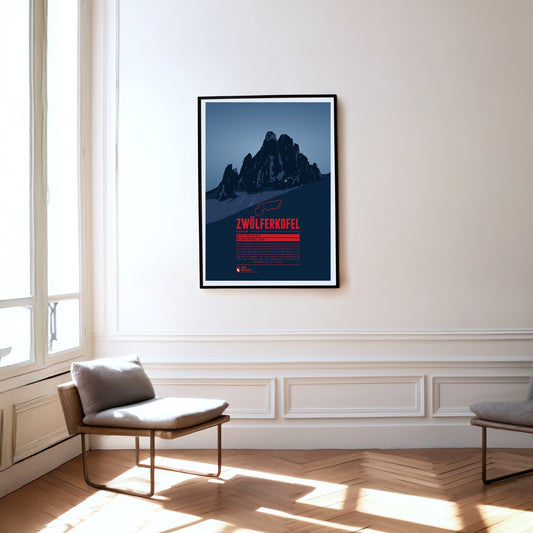
The Zwölferkofel or Zwölfer (Twelver) is one of five mountains which together form the Sexten Sundial. Seen from Moos near the town of Sexten, at noon (solar time) the sun is roughly over the Zwölferkofel's summit. Accordingly the neighbouring summits are named with numbers from nine to one (in German: Neuner, Zehner, Elfer, and Einser). As many Dolomite peaks, for climbers the Zwölferkofel is a popular and challenging destination.
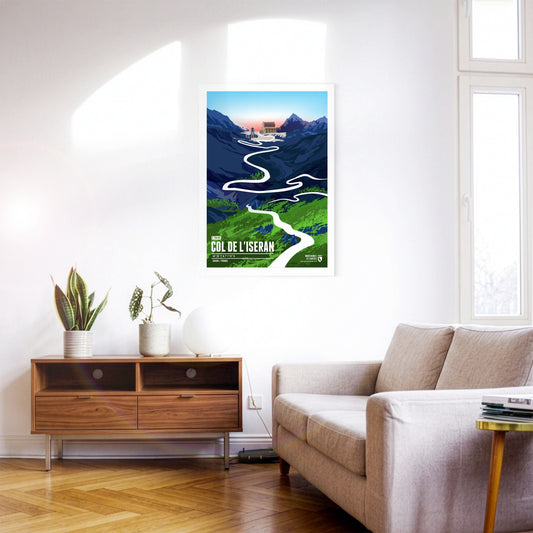
At 2764 metres, the Col de l’Iseran is the highest paved Alpine pass in Europe and one of the most legendary challenges in the French high mountains. It is of great importance for cycling and has been part of the Tour de France several times. Its difficulty comes not only from the amount of climbing and the length of the ascent but also from the thin air and the often extreme weather conditions. Even in high summer, cold and storms can dominate the pass – in 2019 the Tour de France even had to be abandoned here because of snow and landslides.
The Maloja Pass is an impressive mountain pass in the Swiss Alps at an altitude of 1812 metres. It connects the Engadin in the canton of Grisons with the Italian Valtellina and offers breathtaking views of the surrounding mountain landscape. The Maloja Pass is not only an important transport link but also a popular destination for tourists wanting to explore the beauty of the Alpine region.
Alpe d'Huez is a winter sports resort in the French Alps, internationally known as a summit finish of the Tour de France.Alpe d'Huez – these are probably the 21 most famous hairpin bends in the world. The winding climb up to the French resort is also called the "Woodstock of cycling". When the Tour de France stops here, hundreds of thousands make the pilgrimage to the roadside and throw one big party.
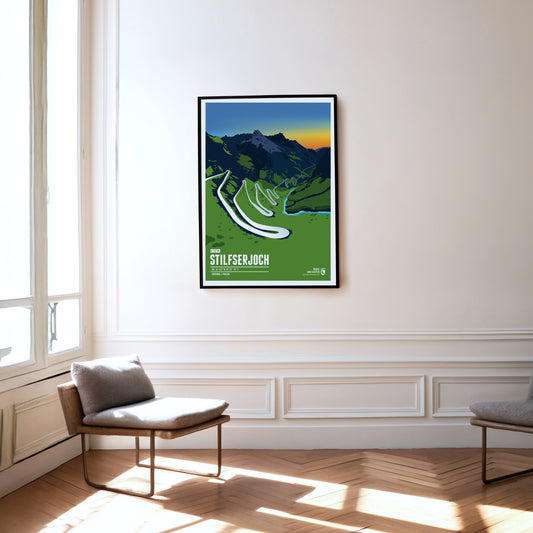
The Stelvio Pass is regarded as ‘the queen of pass roads’ and is the crossing between South Tyrol and Lombardy. With a pass height of 2757 metres, the Stelvio is the highest mountain pass in Italy and the third-highest pass road in the Alps.
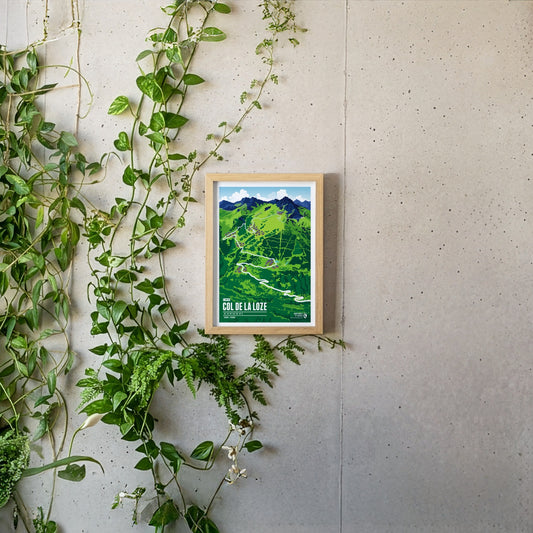
At 2304 metres, the Col de la Loze is one of the highest rideable passes in the French Alps and a legend of modern cycling. The summit between Méribel and Courchevel has only been accessible since 2019, via a paved cycle path closed to cars. Its difficulty lies less in its length than in its erratic profile: constantly changing gradients with ramps of over 20 per cent make any kind of pacing impossible. Part of the Tour de France since 2020, the climb is considered one of the toughest of the race – in 2023 it was here that Tadej Pogačar finally lost the Tour to Jonas Vingegaard.
The beach on the largest and most popular German North Sea island among tourists is 40 kilometers long. It is considered a travel destination for the rich and famous. A railway embankment connects Sylt with the mainland.
El Pico de Teide on Tenerife is the highest mountain of Spain. It is also the high point of all islands in the Atlantic Ocean. Teide was a holy mountain to the Guanches, the native inhabitants of the Canary Islands. The volcano is famous for casting the world's largest shadow onto the sea at dawn, reaching the islands of Gran Canaria and La Gomera, more than 40 kilometres away.
Mount Kosciuszko is the highest summit on the Australian mainland. It is part of some Seven Summits-lists, when considered as the highest peak of the Australian continent. Until the 1970s there was a road ending just a few meters below the summit. Nowadays a hike gets you to the top of the mountain. The first known ascent of Mount Kosciuszko was made in 1840.
Slovenia's highest mountain is an icon for the Eastern Alps and a national symbol shown on the country's coat of arms and the 50 cent coin. Triglav can sometimes still be spotted from a distance of 100 km. Slovenia's only national park is named after the mountain. The opening of the 2864 Bohinj ski resort as the largest Slovenian ski resort, combining both tourism and ecology is planned in the near future.
At 2076 m, the Schneeberg is the highest mountain in Lower Austria and the easternmost two-thousand-metre peak in the Alps. After the Großglockner it has the greatest dominance of all Austrian mountains. In good visibility you can see the capital, Vienna, from the summit. For its residents the mountain is a popular destination close to home.
Piz Bernina is the only four-thousander in the Eastern Alps and the most isolated mountain in Switzerland. The first ascent was made by Johann Coaz in 1850. His journal entries show his love for the Alps: “Serious thoughts took hold of us. Greedy eyes surveyed the land up to the distant horizon, and thousands and thousands of mountain peaks surrounded us, rising as rocks from the glittering sea of ice. We stared amazed and awe-struck across this magnificent mountain world.”
The Peitlerkofel, or ”Sass de Pütia” in Ladin, is situated in the northern Dolomites. The two Summits, “Grosser Peitler” and the 60 meter lower subpeak “Kleiner Peitler”, rise up steeply between Val Badia and Villnöß valley. The Kleiner Peitler can be reached on a hike. In the south climbers find easy routes to the summit of the Grosser Peitler, which offers one of the greatest views in the Dolomites.
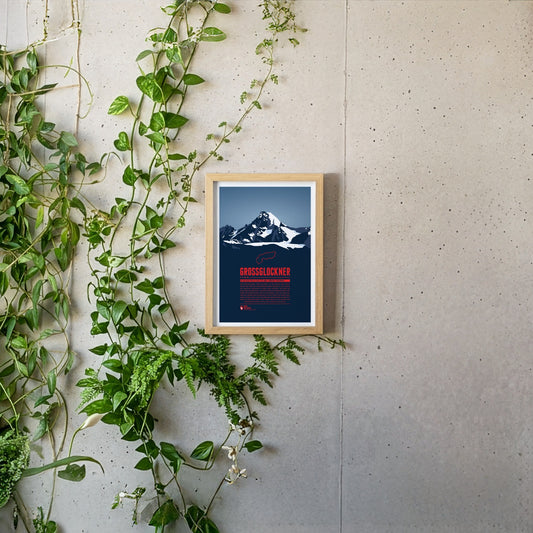
The Grossglockner or Glockner is Austria's highest mountain and one of the most prominent mountains on earth. The view of the summit still fascinates people today. The name of the mountain is probably derived from its bell (German: “Glocke”) -like shape. Besides the first successful summit ascent in 1800 fron Heiligenblut the ascent via the southwest ridge (Stüdlgrat) from Kals, made by the merchant Johann Stüdl, was one of the mile stones in the climbing history of the Grossglockner. Today more than 20 routes with varying difficulties lead to the summit from both Tyrol and Carinthia. This mountain print shows the view of the Großglockner from Tyrol. We also created a mountain print with the view from Carinthia, see Großglockner (Kärnten).
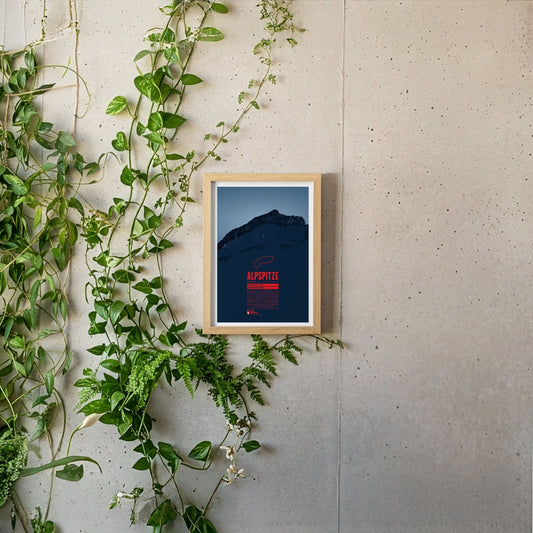
The Alpspitze is located in the Wetterstein mountains close to Germany's highest mountain, the Zugspitze. In spite of its low prominence the mountain's unique pyramid shaped peak makes it one of the most iconic mountains of the Northern Limestone Alps and one of the best-known landmarks of nearby Garmisch-Partenkirchen.
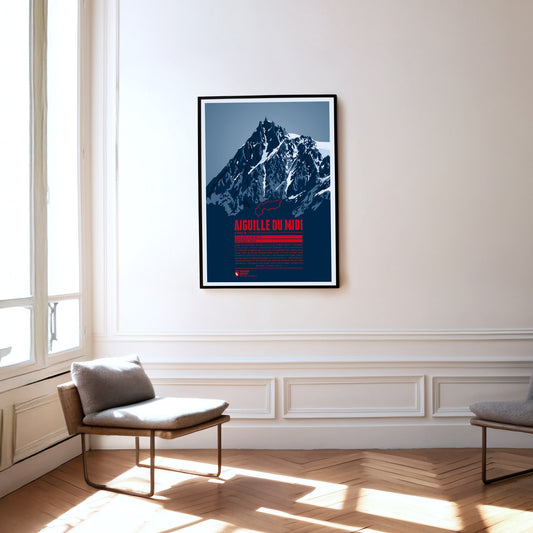
South of Chamonix, the peak of Aiguille du Midi towers in the Mont Blanc massif. It offers a magnificient view and is the starting point for various climbing routes to the surrounding four-thousander peaks, most of all the famous Mont Blanc. A cable car has been running up the Aiguille du Midi since 1955, making the summit, which is now equipped with restaurants and tourist shops, easy to reach. The highest peak of the Aiguille du Midi was climbed for the first time in 1856. Nowadays, the south face is particularly popular for its many climbing routes.
Mount Yari is centrally located on the Japanese island of Honshū in Nagano Prefecture. It is situated in the Hida Mountains, which are part of the Japanese Alps. Mount Yari is one of the “100 Famous Japanese Mountains”, which were listed by Kyūya Fukada in 1964, and it is the fifth highest peak of the country. The mountain owes its name Yari, which translates to “spear”, to its characteristic pointed shape. For this reason it is also known as the “Matterhorn of Japan”.
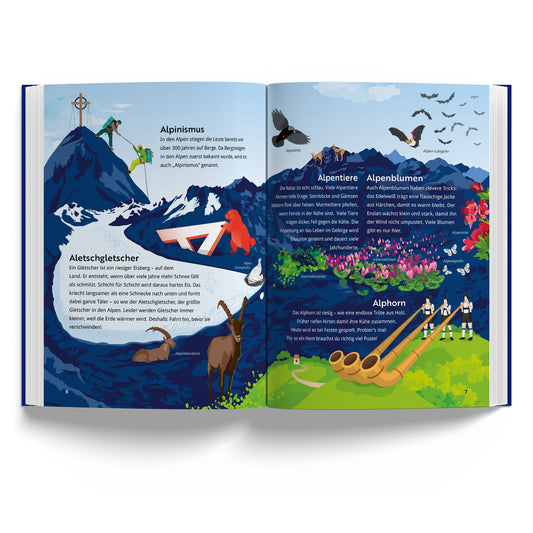
Available in German only. The gift package for all Alps fans, with the Book of the Alps, Berge der Alpen Buch, and the Mountains of the Alps and Alpine animals quartets.
The Mont Ventoux is the highest summit of the southern Dauphiné Limestone Alps. The giant of Provence was the goal of the first documented ascent of an Alpine mountain, undertaken by Francesco Petrarca and his brother, and many have since regarded that climb as the founding moment of alpinism. In cycling it is one of the sacred mountains of the Tour de France, even though the Ventoux has appeared on the race route only every four to five years on average since it was first crossed in 1951.