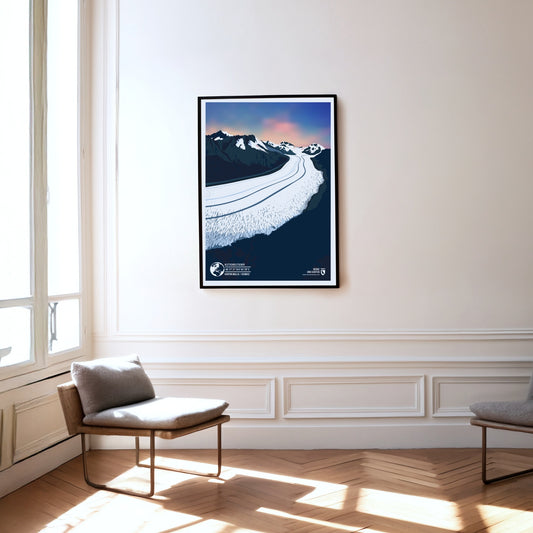
The Aletsch Glacier in the Swiss canton of Wallis is the best-known as well as the longest and biggest glacier in the entire Alps. Starting at a height of about 3800 meters in the Jungfrau-region of the Bernese Alps the glacier reaches over 22 kilometers towards the Massa river, which itself flows into the Rhône. The Aletsch Glacier as well as the adjacent Aletsch Forest make up the biggest part of the UNESCO World Natural Heritage site Swiss Alps Jungfrau-Aletsch.
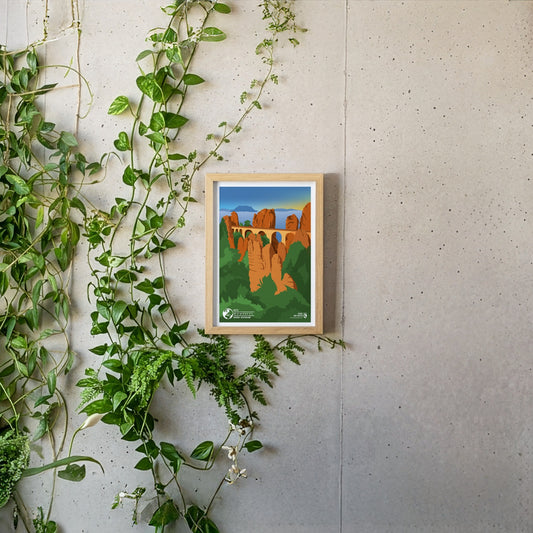
The Bastei is one of the most famous tourist attractions of Saxon Switzerland. At a height of 305 metres above sea level the sandstone plateau offers a breath-taking view of the Elbe valley as well as the distant table hills. Each year about 1.5 million tourists enjoy the unique prospect of the Elbe and the Elbe Sandstone Mountains over the Bastei Bridge, which was build in 1851. Bizarre rock plateaus which stem all over in the adjacent forest lend the Bastei its unique appearance.
With its mild climate, vineyards and orchards, Lake Constance is one of Germany's most beautiful holiday regions. Central Europe's third-largest lake connects Germany, Austria and Switzerland – on clear days the view stretches all the way to the Alpine peaks. In the Überlinger See off Konstanz lies Mainau, the lake's third-largest island: 45 hectares of parkland where the mild lake climate lets palms, citrus trees and rhododendrons thrive. Above the gardens stands the Baroque palace of the Teutonic Order, built by Johann Caspar Bagnato between 1739 and 1746. Grand Duke Friedrich I of Baden made the island his summer residence from 1853 and laid out the arboretum, whose giant sequoias planted in 1864 are among the oldest in Europe – to this day the flower island is run by the Bernadotte family.
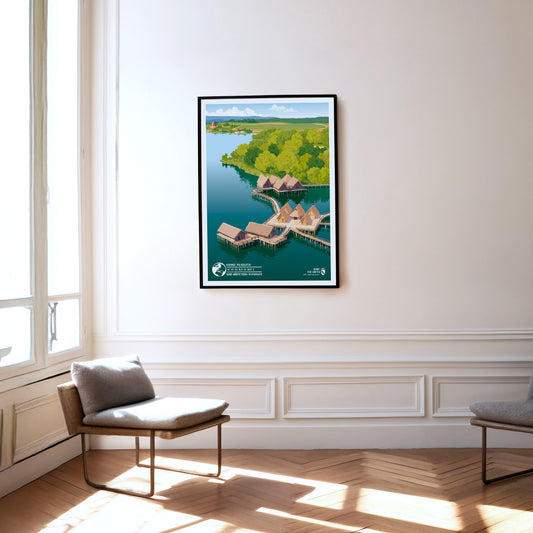
With its mild climate, vineyards and orchards, Lake Constance is one of Germany’s most beautiful holiday regions. Central Europe’s third-largest lake connects Germany, Austria and Switzerland – on clear days the view stretches all the way to the Alpine peaks. On the northern shore at Unteruhldingen, the pile dwellings stand on stilts in the water: reconstructed Stone and Bronze Age villages, now a UNESCO World Heritage Site. Above the fields behind them rises the baroque Birnau Abbey with its famous pilgrimage church.
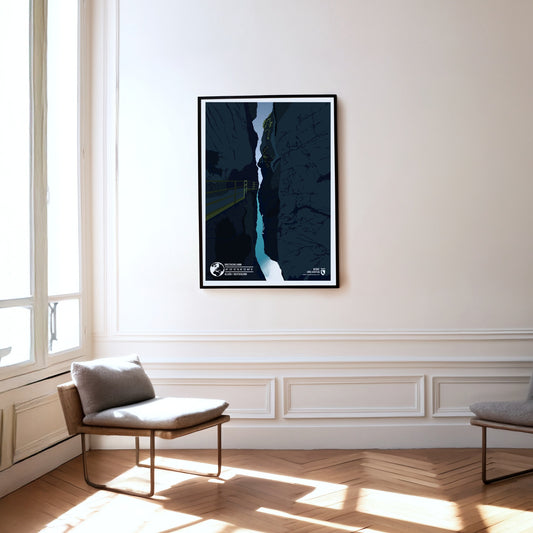
The Breitachklamm is the deepest gorge in Central Europe with a depth of 150 metres. Over 8000 years ago, during the glacial melt of the last ice age, the Breitach dug through the massive alpine rock. The 2.5-kilometer-long canyon was first made accessible at the beginning of the 20th century. Since then, it has become one of the most popular tourist attractions in the Allgäu.
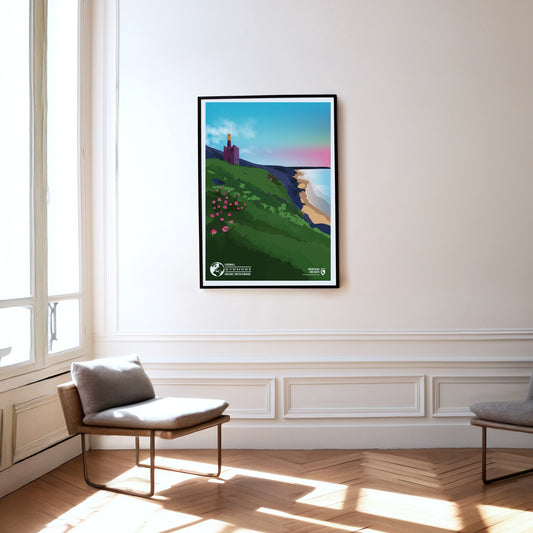
Due to its location on the Celtic Sea, the Cornwall region in the southwest of England offers an unusually mild climate that also influences the local flora and fauna. The landscape features breath-taking cliffs that overlook picturesque bays and colourful gardens in which even subtropical flowers bloom in full splendour.
The “Eisriesenwelt” (the World of the Ice Giants) in the Tennen Mountains in the Austrian state of Salzburg is the largest ice cave in the world. On a distance of over 42 kilometers visitors are presented with a breath-taking natural spectacle that reaches deep into the mountain. Crystal clear ice palaces with monumental ice formations dominate the complex cave system. Even on hot summer days temperatures inside the cave are usually below freezing.
Ko Lanta is arguably the most beautiful island of Thailand. Situated in the southwest of the country it actually consists of two islands lined with turquoise-blue bathing bays. While the main island of Lanta Yai has numerous hotels and tourist attractions, the northern island of Lanta Noi has mostly been left untouched. This balance between thriving tourism and pristine nature makes Ko Lanta unique.
Nestled between the steep slopes of the Watzmann and the Hagengebirge, the Königssee lies hidden in the Berchtesgaden National Park. Its breathtaking natural setting is shaped by the almost vertical slopes of the surrounding mountains. Owing to the unique architecture of the terrain, the crystal-blue water can only be explored by boat – there are no footpaths or cycle paths around the lake.
The impressive chalk cliffs are the iconic landmark of Rügen. The fascinating colour contrast between lush green forest, chalk-white limestone walls and turquoise-blue sea water has been attracting large numbers of tourists and inspired several well-known poets and painters over the years. One of the most famous among them was the romantic Caspar David Friedrich, who immortalized the play of colours in his painting “Kreidefelsen auf Rügen”.
Austria's highest waterfall is located in the High Tauern National Park: the Krimml Waterfalls. Over 380 meters the Krimmler Ache plunges over three cascades into the Salzach, which itself flows into the Inn. The natural spectacle can be best admired from the hiking trail Krimml Wasserweg, which each year leads large numbers of visitors into the iridescent drizzle of the roaring water.
Amid the Swiss Alpine landscape, the Lauterbrunnen Valley cuts through the Bernese Alps. The small villages of the trough valley are surrounded by steep, lush green cliffs, from which waterfalls plunge several hundred metres into the deep. This collection of springs and streams not only gave the iconic region its name, but it also inspired world-famous "The Lord of the Rings" author J.R.R. Tolkien for the elven home of Rivendell.
Lüneburg Heath is a unique natural landscape in northern Germany, created by centuries of grazing and clearing. The region was originally covered by dense forest, but human influence turned it into wide stretches of heathland. Today the area covers around 7400 square kilometres and is known above all for its purple flowering heather in late summer.
Over a thousand individual lakes form the Mecklenburg Lake Plateau (German: Mecklenburgische Seenplatte). The network of waters makes the region particularly popular with water sport-enthusiasts, while also being attractive for hiking or cycling. Numerous national parks, clear lakes and starry night skies promise everlasting memories.
Lago di Braies, known in German as the Pragser Wildsee, lies in the heart of the Braies Dolomites in South Tyrol and is therefore also called the pearl of the Dolomite lakes. It is the largest of these lakes and a popular destination, and it is the setting for numerous myths and legends of the region. At the southern end of the lake, where the imposing Seekofel towers above the water today, the gateway to the underworld is said to have stood.
Puente Nuevo is the main tourist attraction of the small town of Ronda in southern Spain. The massive bridge connects the old town with the younger El Mercadillo district over the approximately 120-meter-deep El Tajo canyon. In the 18th century the ashlar stones that form the bridge were cut in the in the very ravine which they bridge today. It took 40 years to build Puente Nuevo.
Lake Reschen is known above all for the church tower rising out of the water – a landmark of the submerged village of Alt-Graun. The artificial lake lies at around 1500 metres near the border with Austria and is now a popular destination for water sports, cycling and winter tourism.
The Schlögener Schlinge is an impressive natural wonder in Upper Austria. About halfway between Passau and Linz, the Danube, guided through hard granite stone of the Bohemian massif, makes a sharp turn that almost closes the river in a circle. The impressive meander can be viewed extraordinary well from the viewing platforms in the Schlögener area, which are connected by numerous cycling and hiking trails.
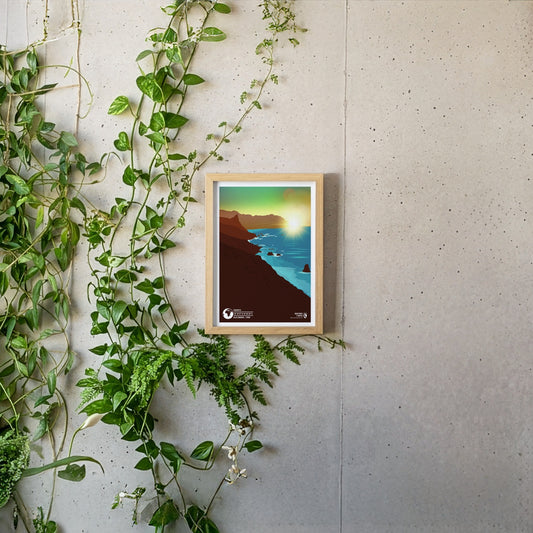
Tenerife is the largest of the Canary Islands and charms visitors in every season with its mild climate. The Spanish volcanic island stands out for its geographical variety: while the Pico del Teide, at 3718 metres the highest mountain in Spain, towers at its centre, in the east of the island you can enjoy the flowering plants of the green Orotava valley or explore the yellow Californian poppy meadows near Arafo. The north-east of the island is covered by the wildly rugged, densely wooded Anaga mountains, which rise steeply from the sea at the coast to a height of around 1000 metres.
The Teufelstisch ("devil's table") at Hinterweidenthal is one of the scenic landmarks of the Palatinate. At around 14 metres high, the mushroom rock is the largest of its kind in the Palatinate Forest and a popular climbing destination, though many also explore it on foot along the Hinterweidenthal Teufelstisch trail. The unique formation came about as erosion wore away the surrounding rock layers until only the hard stone remained that gives the Teufelstisch its astonishing shape today.
During the glacial melt of the last ice age the Gorges du Verdon was dug through the thick limestone in today's département Alpes-de-Haute-Provence. The breath-taking gorge is also called the “Grand Canyon of Europe”, due to the iconic steep white rock cliffs that line the course of the Verdon river and which can rise up to heigts of 700 meters over the water.
Regular price
from 19 €
Regular priceSale price
from 19 €
Books, maps and more.
About the Alps and the world.