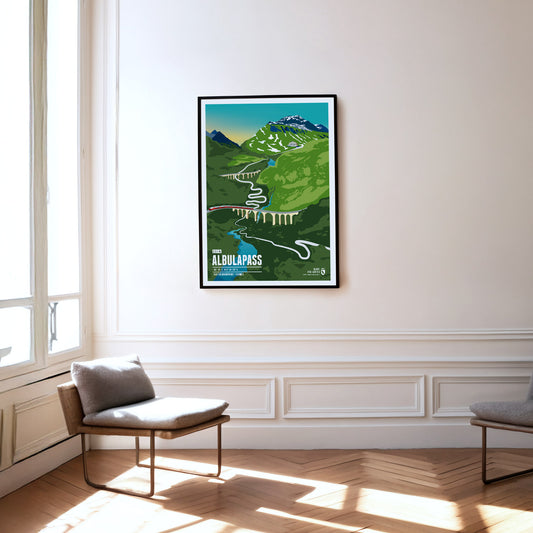
The Albula Pass in the Swiss canton of Graubünden connects the Albula Valley with the Engadin high valley. It is one of the most popular Alpine passes for cycling. The more than 20 km long ascent from the west is scenically particularly beautiful and varied. Not only the mountains impress, but also the route of the Rhaetian Railway, which runs parallel to the pass road. Because of the train alternative and the partly narrow road, there is relatively little car traffic on the pass.
Alpe d'Huez is a winter sports resort in the French Alps, internationally known as a summit finish of the Tour de France.Alpe d'Huez – these are probably the 21 most famous hairpin bends in the world. The winding climb up to the French resort is also called the "Woodstock of cycling". When the Tour de France stops here, hundreds of thousands make the pilgrimage to the roadside and throw one big party.
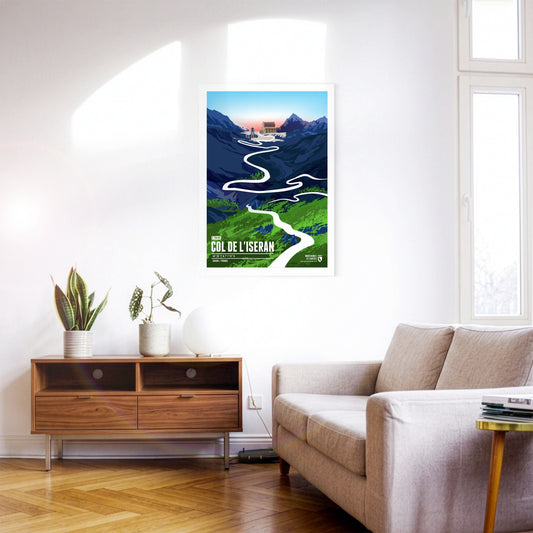
At 2764 metres, the Col de l’Iseran is the highest paved Alpine pass in Europe and one of the most legendary challenges in the French high mountains. It is of great importance for cycling and has been part of the Tour de France several times. Its difficulty comes not only from the amount of climbing and the length of the ascent but also from the thin air and the often extreme weather conditions. Even in high summer, cold and storms can dominate the pass – in 2019 the Tour de France even had to be abandoned here because of snow and landslides.
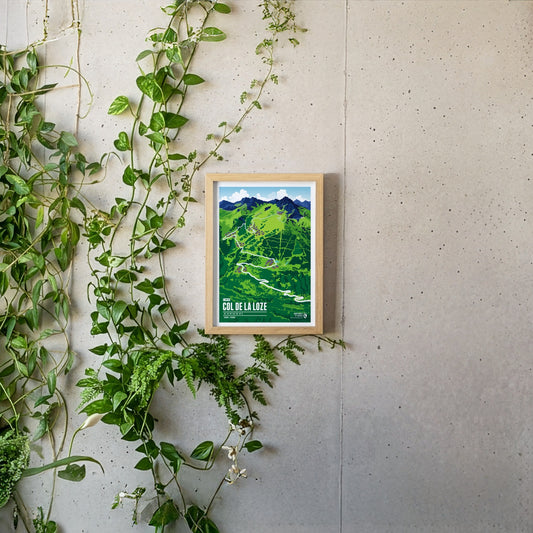
At 2304 metres, the Col de la Loze is one of the highest rideable passes in the French Alps and a legend of modern cycling. The summit between Méribel and Courchevel has only been accessible since 2019, via a paved cycle path closed to cars. Its difficulty lies less in its length than in its erratic profile: constantly changing gradients with ramps of over 20 per cent make any kind of pacing impossible. Part of the Tour de France since 2020, the climb is considered one of the toughest of the race – in 2023 it was here that Tadej Pogačar finally lost the Tour to Jonas Vingegaard.
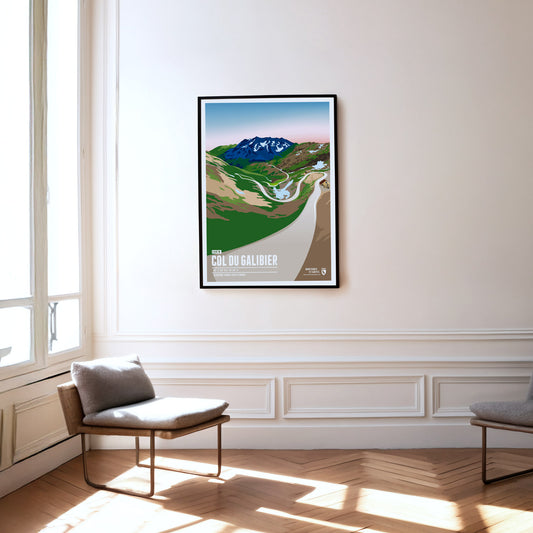
At 2642 m, the Col du Galibier is the fifth-highest paved road pass in the Alps. This pass in the Western Alps is one of the absolute classics on the Tour de France programme, and it has a great deal to offer scenically as well. Much of the route runs through high Alpine terrain resembling a lunar landscape. The Galibier also forms a climatic boundary between the wetter northern Alpine climate and the dry Mediterranean climate on its southern side.
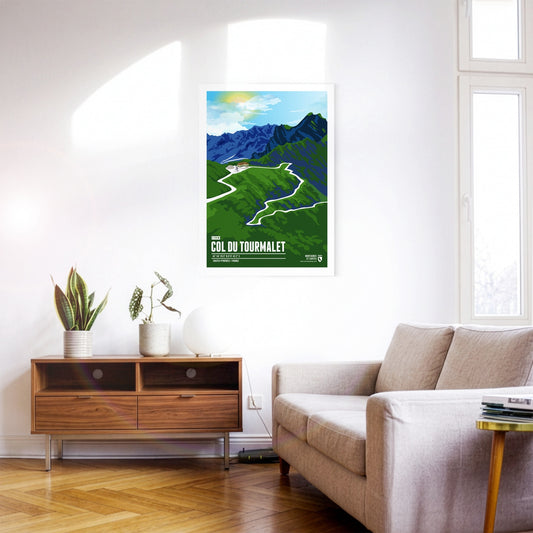
The Col du Tourmalet is a French Pyrenean pass in the south-west of the Hautes-Pyrénées department. It owes its fame above all to cycling: no other mountain pass has been ridden more often in the history of the Tour de France. The Tourmalet was already on the programme in 1910, when the Tour first went into the Pyrenees. Octave Lapize, who reached the top first and went on to win the 1910 general classification, is said to have hurled the indignant cry "Vous êtes des assassins!" ("You are murderers!") at the race organisers. The Vuelta a España has also climbed the Tourmalet several times.
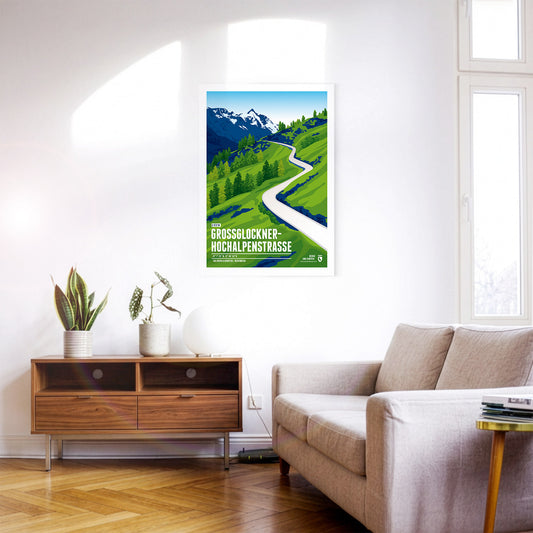
On the Großglockner High Alpine Road, the saying “the journey is the destination” is to be taken literally. The road is far more than an ordinary car link between the Austrian federal states of Salzburg and Carinthia; it is also a tourist attraction and a natural spectacle. Following its course takes you through the Hohe Tauern National Park in the middle of the high Alps, with sections at altitudes of up to 2500 metres. In the spring and summer months there is also a good chance of spotting Alpine marmots, which are numerous in the area.
The Julier Pass is a significant mountain pass located in the Swiss Alps, reaching an elevation of 2284 meters. It connects the Engadin valley in the canton of Graubünden with the rest of Switzerland and offers stunning vistas of the surrounding peaks. With its rich history as an ancient trade route and its modern importance as a major roadway, the Julier Pass attracts both travelers and outdoor enthusiasts alike.
At 1948 metres, the Klausen Pass links the Schächental in Uri with the Linthal in Glarus. Our print shows it from the eastern side: the hairpins of the pass road high above the Urnerboden, which at eight kilometres long is the largest alpine pasture in Switzerland, grazed by around 1200 cattle each summer. Below runs the Fätschbach, which rises beneath the Clariden, bursts from the rock face as a spring waterfall and further down tumbles over the ledges of the Berglistüber into the Linthal. The pass road was built between 1893 and 1899, and from 1922 to 1934 the legendary Klausen race was held here – in winter the crossing is closed.
The Maloja Pass is an impressive mountain pass in the Swiss Alps at an altitude of 1812 metres. It connects the Engadin in the canton of Grisons with the Italian Valtellina and offers breathtaking views of the surrounding mountain landscape. The Maloja Pass is not only an important transport link but also a popular destination for tourists wanting to explore the beauty of the Alpine region.
Mont Ventoux is a 1909-metre massif in the French Provence. Also known as the "Giant of Provence", it holds great significance for cycling. Although the mountain is considerably lower than the best-known Alpine passes, it is comparable in difficulty – not only because of the many vertical metres, but often also because of the heat of Provence and a merciless headwind over the final kilometres.
At 1750 metres the Monte Zoncolan is no giant – and yet it is regarded as the most feared climb in Italy. The notorious side is the western ramp from Ovaro: 10.1 kilometres, 1210 metres of ascent, 11.9 per cent on average and ramps of up to 22 per cent, plus a stretch of forest that climbs at around 15 per cent for six kilometres on end. The Giro d'Italia has been coming up here since 2003 – Gilberto Simoni, Ivan Basso, Igor Antón, Michael Rogers, Chris Froome and, in 2021, Lorenzo Fortunato have all won at the top. In winter the Ravascletto-Zoncolan ski area lies on its slopes.
Framed by Sass Pordoi and Sass Becé, the Passo Pordoi lies in the heart of the Dolomites and separates the Italian provinces of Trento and Belluno. Built at the beginning of the 20th century as one of the highest paved mountain passes in the Dolomites in order to connect Bolzano with Cortina d'Ampezzo, the pass is above all a popular destination today. In summer the Passo Pordoi is a starting point for hikes, climbs and mountain tours, while in winter the slopes of the Belvedere and Arabba ski areas can be reached from here.
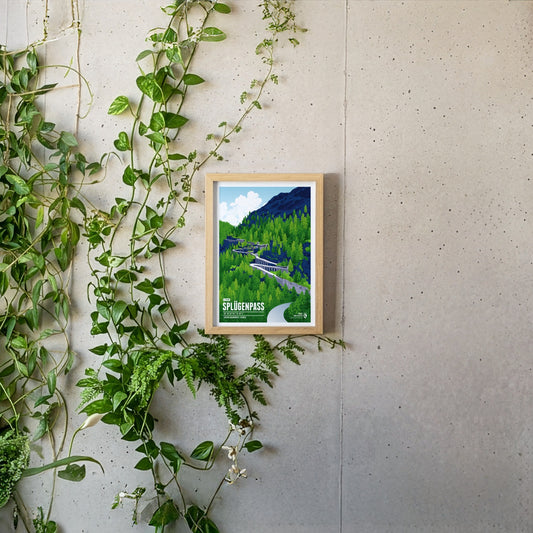
The Splügen Pass connects Switzerland with Italy and impresses with its many tight hairpin bends, historic tunnels and protective stone galleries that cling spectacularly to the rock. The winding pass road is particularly thrilling, turned into an unforgettable experience by these unique structures and the imposing Alpine landscape.
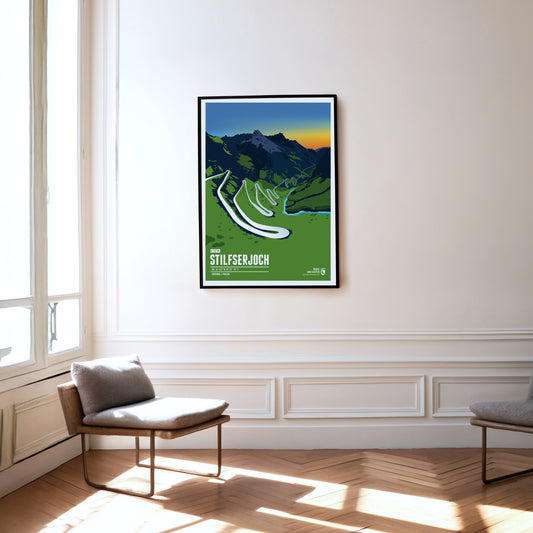
The Stelvio Pass is regarded as ‘the queen of pass roads’ and is the crossing between South Tyrol and Lombardy. With a pass height of 2757 metres, the Stelvio is the highest mountain pass in Italy and the third-highest pass road in the Alps.
The Timmelsjoch, also called the Timmel, is a 2474-metre border pass between Austria and Italy that separates the Ötztal Alps from the Stubai Alps and connects the Ötztal with the Passeier valley. The pass, whose name derives from the Romansh word "tömbl" for hill, has been used since the earliest times and was an important trade route, including for the Fugger and Welser merchant families. The border between Italy and Austria has run across the pass since 1920, and in 2010 the Timmelsjoch Museum opened – built exactly on the border and highlighting the history and significance of the pass.