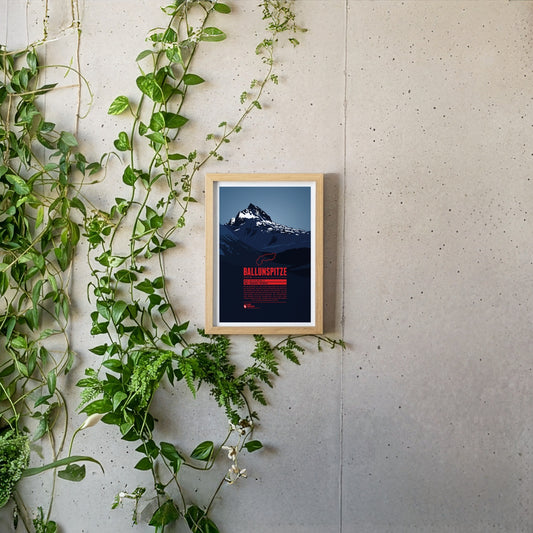
The Ballunspitze is well-known among the visitors of the ski resort Galtür, which is situated in Tyrol on the northern slopes of the mountain, near the town of Wirl. The chairlift Ballunspitzbahn gets you up to 2200 meters. West of the ski area, in Vorarlberg, the Kops water reservoir can be found, which was constructed in the 1960s. South of the Ballunspitze the Threethousanders of the Silvretta Alps dominate the view.
The two peaks of the Aiguille du Dru in the northern part of the Mont Blanc massif rise steeply into the sky of the French Alps. The Grand Dru is the higher summit. The Petit Dru is about 20 meters lower. The impressive shape of the mountain has fascinated generations of climbers in Europe, and notably in France. The first ascent of the Grand Dru was accomplished in 1878 via the south-east face.
Toubkal is the highest peak in the Atlas Mountains. It is also the high point of Morocco and in the entire Arab world. Since Toubkal can be climbed fairly easy it is a popular destination for mountaineers who want to experience and acclimatize in heights above 4000 meters. On clear days the view from the summit offers a great panorama of southern Morocco and goes as far as the Sahara desert.
El Pico de Teide on Tenerife is the highest mountain of Spain. It is also the high point of all islands in the Atlantic Ocean. Teide was a holy mountain to the Guanches, the native inhabitants of the Canary Islands. The volcano is famous for casting the world's largest shadow onto the sea at dawn, reaching the islands of Gran Canaria and La Gomera, more than 40 kilometres away.
Situated in the Ethiopian Highlands, Ras Dashen is the highest mountain of Ethiopia and the tenth highest summit on the African continent. The mountain top consists of seven rock peaks. The exact height of Ras Dashen is disputed. Its official height is 4533 meters, even though later surveys measured a height of 4550 meters. Since the summit of Ras Dashen can be reached fairly easy, it is assumed that it was climbed very early. The first ascent by a European was recorded in 1841.
Pico de Orizaba is also known as Citlaltépetl (star mountain) or Iztactépetl (white mountain). It is not only Mexico's highest and North America's third highest peak, but also the highest volcano on the continent. On clear days the snow-covered mountain top is visible in distances of more than 100 kilometers. Several glaciers can be found on the slopes of Pico de Orizaba, among them Mexico's largest glacier, Gran Glaciar Norte.
Ojos de Salado is made up of two summits, one in Chile, one in Argentina. The difference in elevation between the two is less than a meter. The international border runs along in between the two summits. Earth's highest active volcano is also the second highest mountain in South America and the high point of Chile. Thus Ojos de Salado is part of the Seven Second Summits and the Volcanic Seven Summits. In spite of its height, reaching the top of Ojos de Salado is quite easy, with no climbing involved. Yet, the first recorded ascent was only made in 1937 by a Polish expedition.
Gora Narodnaya was named as the “People’s Mountain”. It is the highest peak in the Ural Mountains, on the border of Europe and Asia. It is also the highest summit in European Russia outside the Caucasus. Even though the mountain has an elevation of less than 2000 metres it is still an ultra-prominent summit, with more than 1500 metres in topographic prominence. Narodnaya was only discovered and confirmed to be the Ural’s highest peak in 1927. During that expedition the same explorers also became the first known people to reach the top of the mountain.
Situated in the Western Himalaya, Nanga Parbat is the ninth highest mountain on Earth and the westernmost 8000er. The second most prominent peak in the Himalaya is one of the most impressive mountain massifs on the planet. Its southern Rupal Face is regarded as the highest mountain face of the world, with more than 4500 metres in height. Only 25 kilometres away from the summit lies the Indus valley, about 7000 metres lower. This is one of the most dramatic altitude differences on Earth, on such a short distance. Besides K2 and Annapurna, Nanga Parbat is regarded as one of the most difficult mountains to climb on the planet. The first ascent was accomplished by Hermann Buhl from Tyrol, Austria in 1953. The first successful summit attempt in the winter followed over 60 years later, in 2016.
Mount Kosciuszko is the highest summit on the Australian mainland. It is part of some Seven Summits-lists, when considered as the highest peak of the Australian continent. Until the 1970s there was a road ending just a few meters below the summit. Nowadays a hike gets you to the top of the mountain. The first known ascent of Mount Kosciuszko was made in 1840.
With an elevation of 5199 metres Batian is the highest peak of Mount Kenya. It is also the high point of Kenya and the second highest of the African continent, after Kibo in the Kilimanjaro massif, which makes Mount Kenya one of the Seven Second Summits. The few remaining glaciers on the top of the mountain are expected to vanish during the 21st century. The iconic peak is still visible far away and has a great historic and cultural significance for the local population. Europeans only discovered the mountain in the 19th century. In 1899 the first European successfully reached the summit of Mount Kenya.
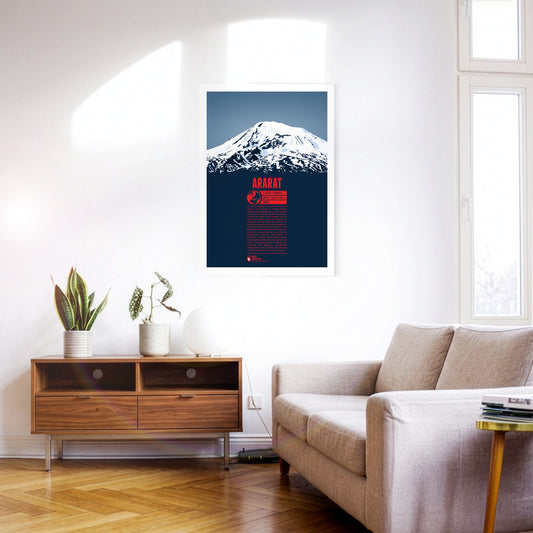
Up to this day there is still a strong belief by some that Mount Ararat is the resting place of Noah’s Arc. With over 5000 meters in elevation the dormant volcano is the highest mountain in Turkey, situated in the east of the country, close to the borders to Armenia, Iran and Azerbaijan. In Turkish the mountain is known as Ağrı Dağı. Right next to it the Little Ararat rises to 3896 meters. The ascent of Ararat was tried many times since the middle ages. Yet, only in 1829 the first expedition finally reached the summit. Climbing Ararat in the winter is still rarely undertaken, since it is much more difficult. due to low temperatures and severe storms on the mountain.
Mauna Kea - “the White Mountain” - is the high point of the Hawaiian islands. It may even be considered to be the highest mountain on the planet if you measure the height from the mountain base below sea level to the summit, where Mauna Kea reaches over 10000 meters. The dormant volcano is over one million years old. On the mountain top, which is easily accessible, the Mauna Kea Observatory was built.
Kangchenjunga is the high point of India, on the border to Nepal. The third highest mountain on Earth is also the easternmost 8000er. Until the 1850 it was even assumed to be the highest mountain on the planet, before Mount Everest and K2 were both confirmed to be higher. The mountain’s name can be translated as “the five treasures of the high snow”. One interpretation is that the name refers to Kangchenjunga’s five highest peaks, four of which reach heights of more than 8000 metres. There are three climbing routes to the summit from Nepal. The fourth route from India, which was only climbed successfully three times, is officially closed since 2000. The first known ascent of Kangchenjunga was accomplished in 1955.
On the border between China and Pakistan the K2 rises steeply into the sky. It is the second highest mountain on earth and the highest peak in the Karakoram. The name goes back to the British who labeled the highest summits of the mountain range K1 to K5. Masherbrum or K1, almost 800 meters lower than K2, appeared to be the higher mountain to them at first. Reaching the summit of K2 is regarded as significantly more difficult than the ascent of Mount Everest. It involves a greater level of technical climbing and the mountain is even more exposed to extreme winds and storms, making summit attempts even more challenging, or completely impossible. The first successful ascent was accomplished in 1954. Until 2015 only about 300 other climbers reached the top of the mountain.
There is hardly another mountain on earth with such cultural significance as Mount Fuji. From ancient to modern times Fuji-san has almost been worshiped like a god in Japan. Together with Tate and Haku it is one of the Three Holy Mountains of Japan. The country's highest summit is still an active volcano, even though there is only a low chance of an eruption. The first recorded summit ascent was achieved by an unknown monk in 663. Women were only allowed access to the mountain in the 1860s.
The majestic rock needles of Fitz Roy, reach heights of more than 3400 meters and rise into the sky of Patagonia. Fitz Roy is a dream destination for mountaineers and climbing to the top is a great Alpinistic challenge. The mountain was named after Captain Robert FitzRoy of the science vessel HMS Beagle. Since the mountain top is often surrounded by clouds the Native inhabitants of the area named the mountain El Chaltén - “the smoking one”.
Etna is the highest mountain on Sicily and the highest active volcano in Europe outside the Caucasus. It is on the UN list of Decade Volcanoes, as well as a UNESCO world heritage site. Even though the Etna is in an almost constant state of volcanic activity thousand of tourists visit the mountain each year. There are also two ski resorts on its slopes.
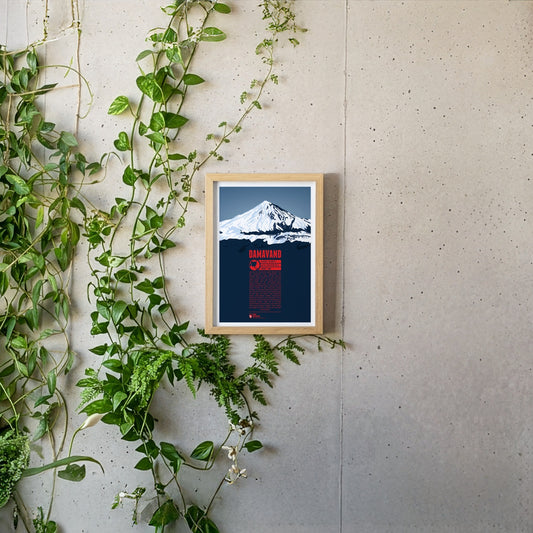
South of the Caspian Sea lies Damavand, the highest mountain of Iran and the highest volcano of Asia, making it one of the Volcanic Seven Summits. This is reflected in the name, which can be translated as “the smoking mountain”. Being the second most prominent summit in all of Asia, after Mount Everest, Damavand is visible from a great distance. In the Persian culture countless myths and legends around Damavand can be found. The mountain is often seen as a symbol against different forms of tyrannic rule and it is still an important symbol for Iranians today. There are more than a dozen known routes to the summit. The first recorded ascent took place as early as 905.
When standing on top of Chimborazo you have reached the farthest point on our planet's surface from the inner core of Earth, thanks to the location of the mountain close to the equator. Ecuador's highest peak is one of the most prominent summits on the planet with over 4000 meters in topographical prominence. There is no higher mountain on the American continent north of Chimborazo. Until the beginning of the 19th century it was even assumed to be Earth's highest mountain above sea level. This lead to numerous summit attempts by Europeans. Yet, the first successful climb to the mountain top was only accomplished in 1880.
According to a Maori legend Aoraki was the tallest of three brothers who stranded with their canoe and were turned into stone. The mountain is the high point of New Zealand, in the Southern Alps. The British named the mountain after explorer Captain James Cook. In 1998 it was officially named Aoraki / Mount Cook to also honor the native name of the mountain.
Puncak Jaya, also known by its Dutch name Carstensz Pyramid, is the highest mountain of Indonesia and the island of New Guinea, and thus the highest peak on earth which is not located on the major continental landmasses. Puncak Jaya is commonly counted as one of the Seven Summits, when regarded as the high point of Australia-Oceania. Even though Puncak Jaya is the lowest of the Seven Summits and temperatures at the mountain are relatively moderate the climb to the top is technically more demanding than at most of the other continental high points.
Mount Vinson is Antarctica's highest peak. The mountain is located near the Antarctic Peninsula, in the Ellsworth Mountains, about 1200 kilometres from the South Pole. It was only discovered in 1958. One year later Mount Vinson was confirmed to be the highest mountain of the continent. Finally, in 1966 the first expedition reached the summit. The remote location of Mount Vinson and the extreme climate in Antarctica are the biggest obstacles when attempting to reach the top of the mountain. In spite of these conditions, as one of the Seven Summits, Mount Vinson does attract mountaineers from all over, and as of today about 1000 people successfully climbed the world's southernmost continental high point.
The summit of Mount Everest is the highest point on Earth above sea level. The mountain is also known as Chomolungma (Mother Goddess) in Tibetan, and as Sagarmatha (Goddess of the Sky) in Nepali. It was not until the 1850s that Mount Everest was confirmed to be the highest peak of the world. Yet, the first known ascent was only accomplished in 1953 by Edmund Hillary and Tenzing Norgay who chose the South Col route from Nepal, which has remained the most popular route to the summit since. The second main route from Tibet over the North Ridge was first successfully climbed in 1960. Because of the lack of oxygen in high altitudes, low temperatures, harsh weather, and extreme winds Mount Everest remains a dangerous mountain to climb. However, nowadays, due to a significant increase in commercial expeditions, often hundreds of climbers reach Everest's summit per year.
The Kilimanjaro, or more precisely Uhuru Peak on the crater of Kibo, is Africa's highest summit. The Kilimanjaro massif is formed of three volcanoes, including Mawenzi, Africa's third highest summit. The snow-covered top of the massif can be seen from far away. The first recorded ascent of Kibo was made in 1889. When climbing from the base to the top of the mountain a number of different vegetation zones will be passed. Tropical rain forest goes up as high as 3000 metres, followed by moss and desert in the higher regions, and snow and glaciers on the summit. The surrounding Kilimanjaro National Park has been declared a UNESCO World Heritage Site.
Organ Needle is the highest peak of the Organ Mountains in southwestern New Mexico. These mountains consist mainly of granite stone, which in the north formed steep pointed summits, called “The Needles”. Reaching the top of Organ Needle is quite challenging and usually involves free pathfinding and scrambling.
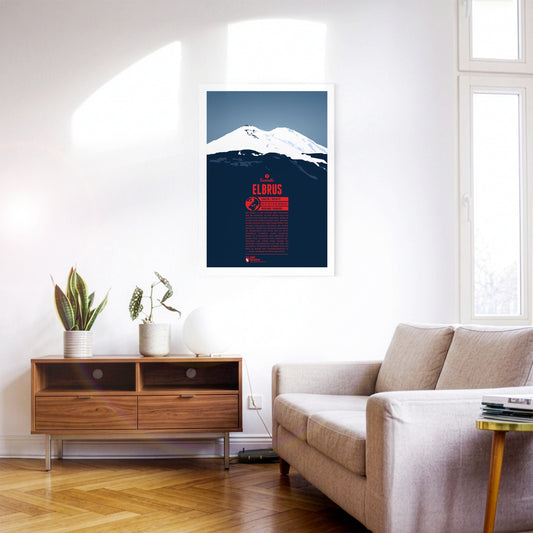
Elbrus is the highest mountain of Russia and in the Caucasus. It is often also regarded as Europe’s highest peak, making it one of the Seven Summits. The lower east summit of Elbrus was first climbed in 1829. The higher west summit was first reached in 1874. The normal route to the top is not particularly difficult. Thus the mountain was already climbed frequently during Soviet times. The great altitudes, low temperatures and harsh winds remain the biggest obstacles on the way to the summit. Because of the extreme cold winter ascents are still very rare.
Denali is North America's highest mountain, and the third most prominent peak on the planet. It was long known as Mount McKinley before formally being named Denali in 2015, the native name of the mountain, meaning “the tall one”. The first successful summit ascent was recorded in 1913. Today the mountain is climbed frequently. Not only is it one of the Seven Summits. Its cold temperatures and harsh winds also make it a great destination for climbers who want to prepare for Himalaya expeditions.
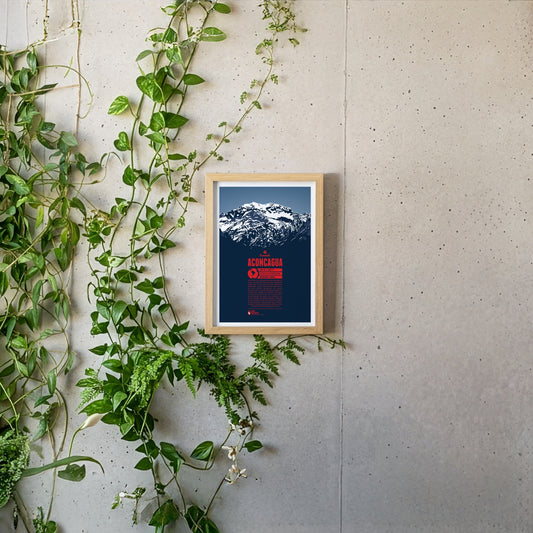
Aconcagua is the highest mountain in South America and also Earth's highest mountain outside of Asia and in the Southern and Western Hemisphere. It is believed to have been a holy mountain for the Inca. The first known ascent of Aconcagua took place in 1897. Being one of the Seven Summits it is a very popular destination for mountaineers from all over the world. Climbing Aconcagua is not particularly difficult and hardly requires any advanced climbing skills. The ascent is not free of risks, though. Low temperatures, strong winds, and altitude sickness can challenge climbers, especially on the upper part of the mountain.
Wheeler Peak is the highest mountain in New Mexico, situated in the Sangre de Cristo Mountains, the southernmost Rocky Mountains subrange. First known as Taos Peak, the mountain was renamed in 1950, after George Montague Wheeler, a cartographer and explorer. Only 15 miles southwest skiers can enjoy the slopes of Taos Ski Valley.
Wheeler Peak is Nevada's second highest summit, being only 82 ft (ca. 25 m) lower than Boundary Peak, but more prominent than the latter. It is also the highest mountain of the Snake Range. As the mountain with the same name in New Mexico, it is named after George Montague Wheeler, who explored the area in the 19th century. The mountain is part of the Great Basin National Park, which was established in 1986.
The Three Sisters are a group of three volcanoes, made up of Oregon's third-, fourth- and fifth-highest mountains, all having an elevation over 10000 ft (3000 m). Being very close to each other, they appear as an entity. The chapter of the Methodist church of Salem named the three summits from north to south Faith, Hope and Charity in the 1840s. Nearby Mount Bachelor, lying much more remotely by itself, owes its name to the Three Sisters. Today the three mountains are a popular destination for climbers. Even though the South Sister is the highest of the three summits, the North Sister is considered the most dangerous to climb.
Mount Wrightson in southern Arizona is the highest peak in the Santa Rita Mountains, south of Tucson. It was named after William Wrightson, who was killed in the Battle of Fort Buchanan 1865 by Apaches. In contrast to the much more massive Mount Lemmon, north of Tucson, Mount Wrightson has a characteristic pyramid-shaped top. It can be reached fairly easily with a 11 to 14 mile hike. Once at the summit one is rewarded with the best view over the area, overlooking much of southern Arizona and over the border to Mexico.
With a height of 14505 feet (4421 m) Mount Whitney is the highest mountain of the Sierra Nevada, California and the contiguous United States. The summit is less than 90 miles away from North America's lowest point in Death Valley (282 ft below sea level). The challenging Badwater Ultramarathon leads athletes over 135 miles from Badwater in Death Valley to Whitney Portal on 8360 feet (2548 m). Whitney Portal is the starting point for many climbers on their way to Mount Whitney's summit.
Mount Vancouver is part of the Saint Elias Mountains and lies on the US-Canadian border. It has three summits. The north summit is the highest and lies in the Yukon. The international border runs along the south summit, also known as “Good Neighbor Peak”. The mountain was named after the British George Vancouver, who explored the Alaskan coast in the late 18th century. It was first summited in 1949. Due to its remote location summit attempts occur rarely today.
Mount Timpanogos in northern Utah is the second highest mountain of the Wasatch Range in the Rocky Mountains. The name comes from the native Ute tribe, and can be translatet as “rock and water mouth” or “rock and canyon”. The massive mountain's impressive appearance is due to its long ridge of about 7 miles, with many peaks being above 11000 feet (3300 m). Though not completely risk-free, reaching Mount Timpanogos' top requires no particular climbing skills which makes it one of the most frequently climbed summits in the Rocky Mountains.
Regular price
from 19 €
Regular priceSale price
from 19 €
Books, maps and more.
About the Alps and the world.